Roller Shutters vs Blinds & Curtains Perth WA | Which Window Covering Is Right?

1. Understanding Different Window Covering Options
Choosing the right window covering for a Perth home involves considering how the space will be used, the level of privacy required, preferred appearance and ongoing care expectations.
Roller shutters, blinds and curtains are three common residential window covering options, but each uses a different approach.
Roller shutters are generally external window covering systems installed over windows and doors. They operate through side guides and a shutter curtain made from connected profiles or slats.
Blinds are generally internal window coverings available in a range of materials and styles. They are commonly selected for controlling daylight, managing privacy and complementing interior design.
Curtains are fabric-based internal window coverings that are often chosen for their appearance, privacy management and contribution to the style of a room.
The most suitable option depends on the requirements of the home and the priorities of the homeowner. There is no single window covering solution that is suitable for every property.
2. What Roller Shutters Are Designed For
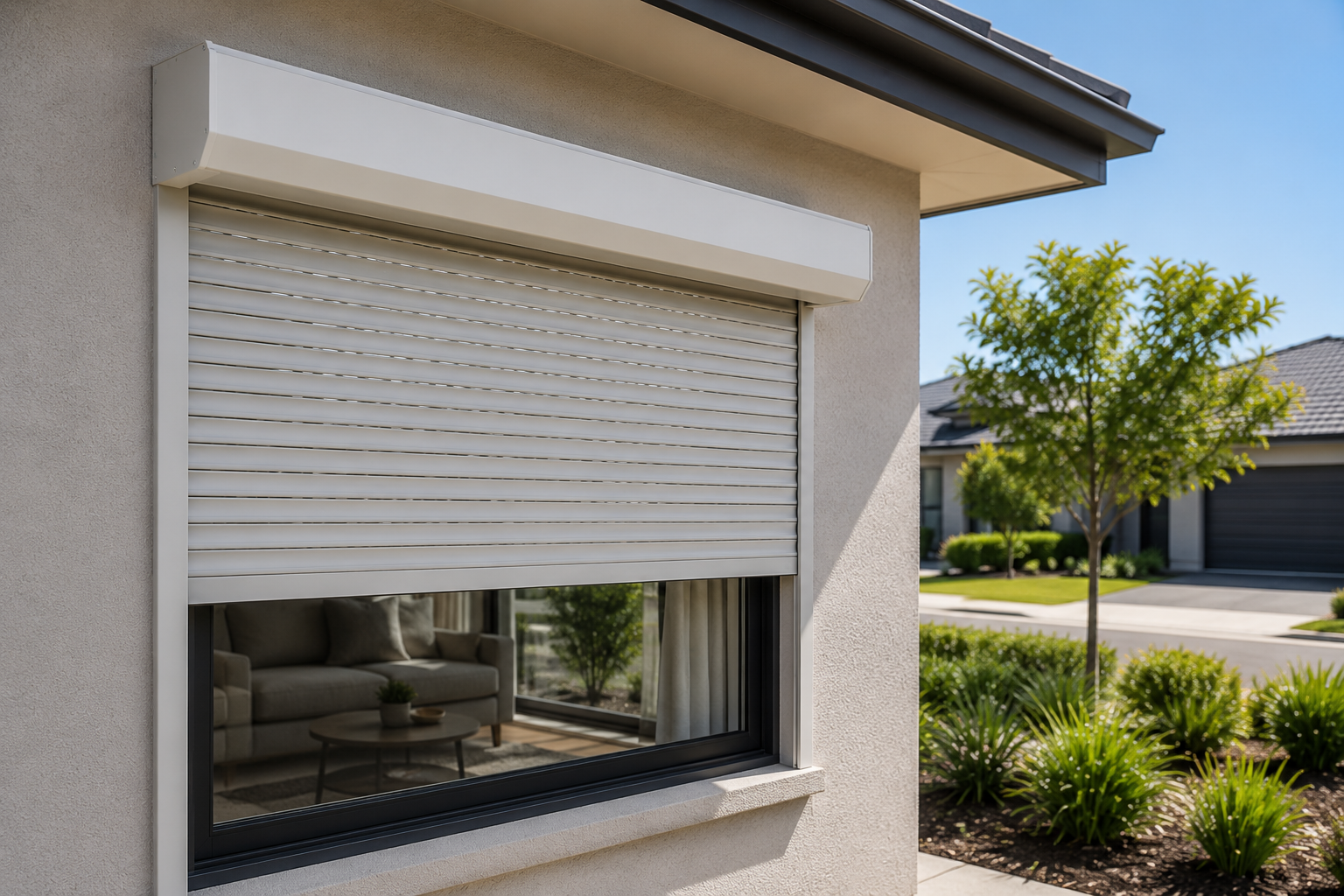
Roller shutters are designed as window covering systems that operate vertically over windows and doors.
A typical roller shutter installation may include:
- shutter curtain or slats
- side guides
- top housing or shutter box
- operating mechanism
- bottom rail
Roller shutters can generally be positioned open, partially closed or fully closed depending on homeowner preference and operating requirements.
Because roller shutters are installed externally, they become part of the outside appearance of the home. They are often considered by homeowners who want an external window covering solution with control over privacy, daylight and access to the window area.
The suitability of roller shutters depends on the product design, installation requirements, property characteristics and homeowner expectations.
3. How Roller Shutters Compare With Traditional Blinds
Roller shutters and blinds are both window covering options, but they operate in different ways.
Roller shutters are generally installed externally and cover the window opening from outside the home. Blinds are generally installed internally and operate within the room.
When comparing these options, homeowners may consider:
- external versus internal installation
- appearance preferences
- privacy requirements
- daylight control
- maintenance expectations
Blinds provide a wide range of interior design choices through different materials, colours and styles.
Roller shutters provide a different approach by forming an external covering system that integrates with the window opening.
The preferred option depends on the homeowner's priorities and the requirements of the property.
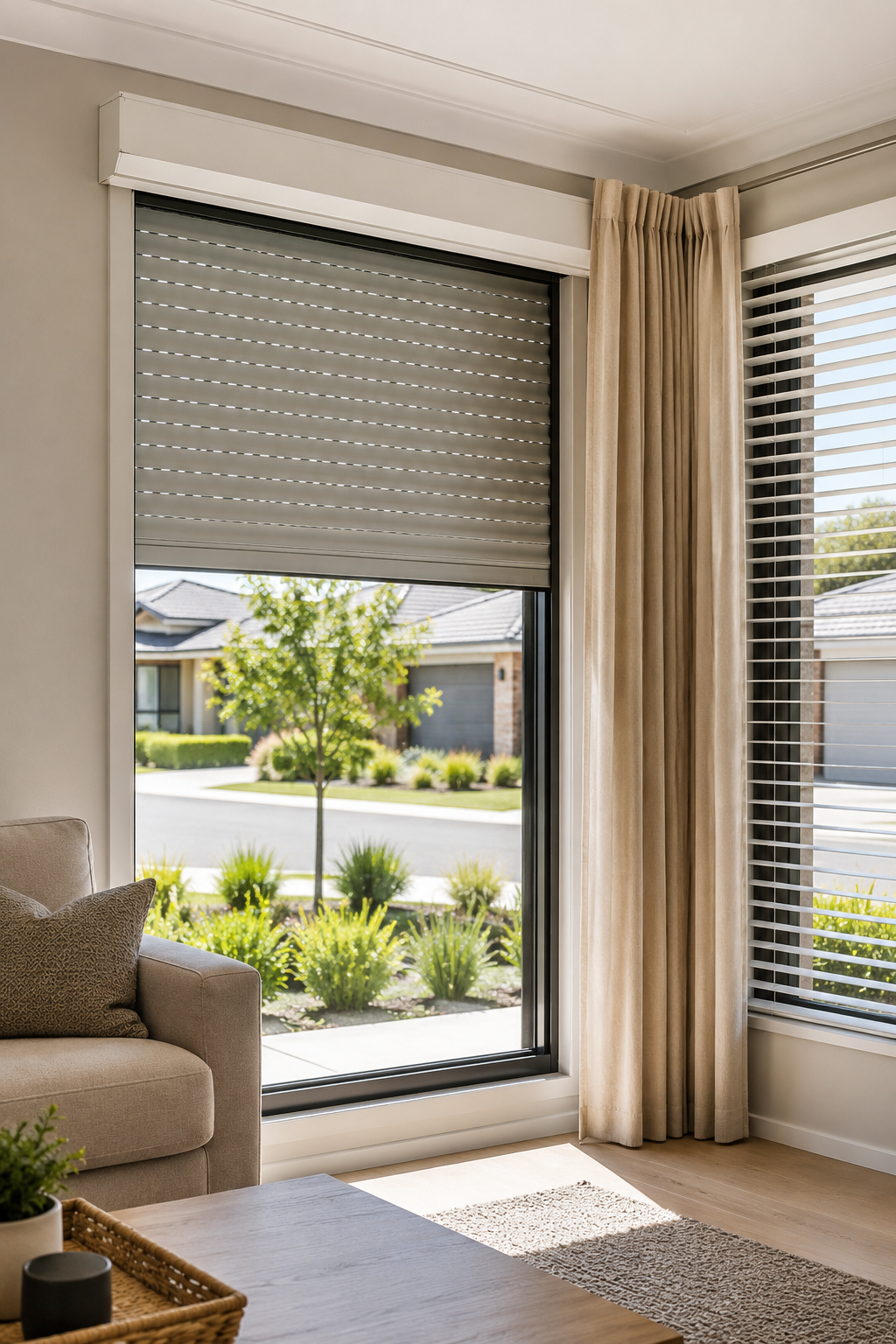
4. Roller Shutters vs Curtains
Roller shutters and curtains serve different purposes within a home.
Curtains are primarily internal window coverings and design features. They can influence the appearance of a room through fabric choice, colour, texture and placement.
Roller shutters are generally external window covering systems that form part of the outside appearance of the property.
When comparing these options, homeowners may consider:
- interior styling preferences
- external appearance
- privacy requirements
- daylight control
- cleaning and care expectations
Some homeowners may prefer curtains because of their decorative flexibility, while others may consider roller shutters because of their external installation and operating characteristics.
The right choice depends on the specific needs of the home.
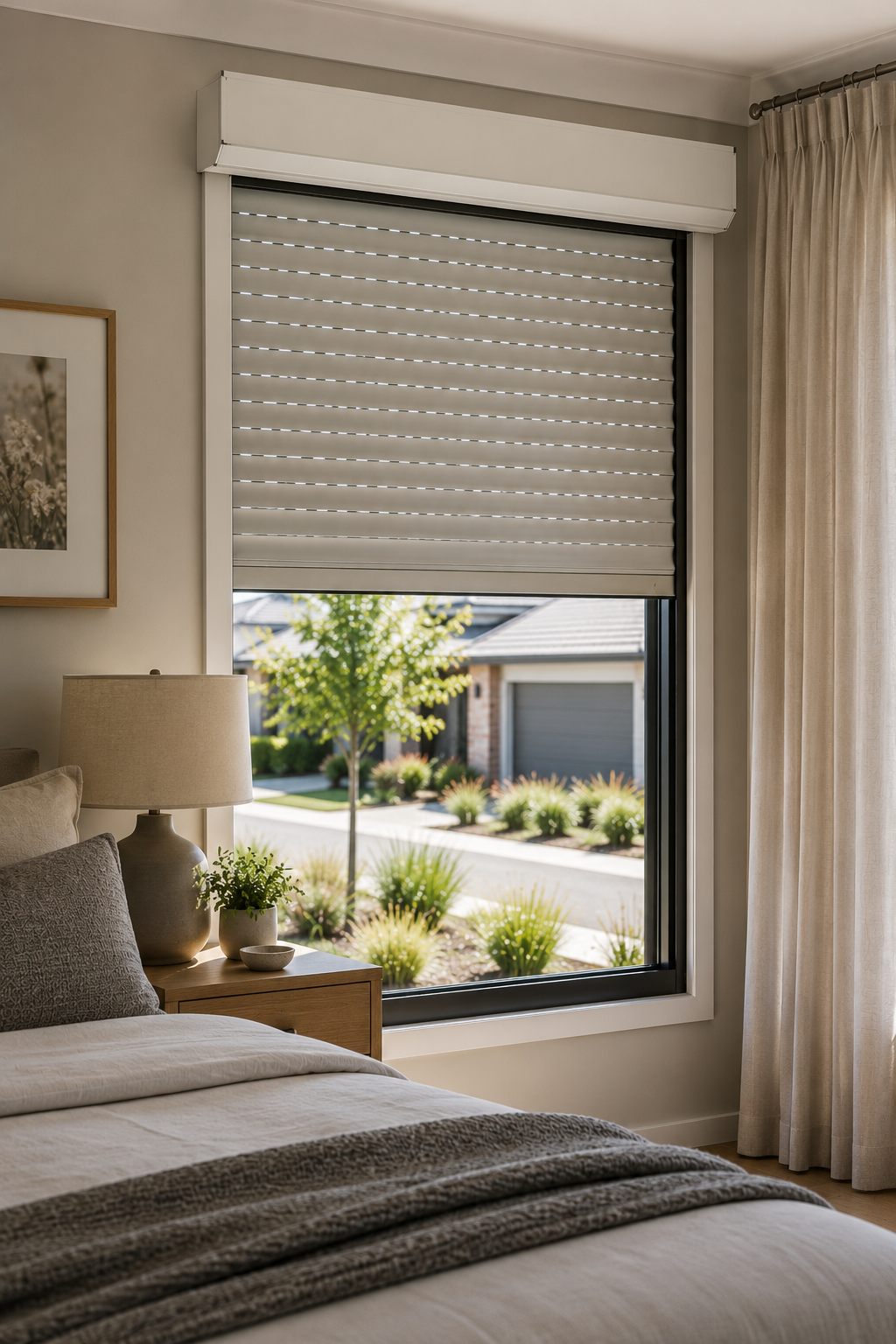
5. Light Control Comparison
Managing natural light is an important consideration when selecting window coverings.
Roller shutters, blinds and curtains each provide different methods of controlling daylight.
Roller shutters allow homeowners to adjust the amount of window coverage by changing the shutter position.
Blinds commonly provide internal adjustment through:
- raising and lowering
- changing slat position
- adjusting fabric coverage
Curtains influence daylight through fabric selection, thickness and positioning.
The preferred option depends on:
- room purpose
- desired daylight levels
- interior design preferences
- homeowner lifestyle
Different window covering types provide different approaches to managing natural light.
6. Privacy Comparison
Privacy requirements vary between homes depending on location, surrounding properties, window placement and homeowner preferences.
Different window coverings provide different approaches to privacy control.
Roller shutters can provide an external covering over windows when closed. Blinds and curtains generally manage privacy from inside the home.
Homeowners may consider:
- neighbouring properties
- window location
- viewing angles
- daytime privacy requirements
- evening privacy requirements
Blinds allow adjustable privacy through positioning, while curtains provide privacy through fabric coverage.
Roller shutters provide a different approach by covering the window externally when closed.
The most suitable choice depends on the privacy needs of the household.
7. Security Considerations
Security is one factor some homeowners consider when comparing window covering options.
Different window covering systems have different physical characteristics based on their construction, installation and operation.
Roller shutters are external systems that cover window openings when closed. Some homeowners consider this an important factor when reviewing options for particular areas of their property.
Blinds and curtains are generally designed primarily for privacy, appearance and daylight management.
Homeowners should consider security alongside other factors including property design, installation requirements and individual circumstances.
Window coverings should not be assumed to provide guaranteed security outcomes.
8. Perth Climate Considerations
Perth homes experience environmental conditions including strong sunlight exposure, seasonal temperature changes and outdoor weather influences.
Window covering choices may be influenced by:
- window orientation
- exposure to sunlight
- room location
- property surroundings
- homeowner comfort preferences
External and internal window coverings interact with residential environments differently.
Roller shutters are positioned externally over windows, while blinds and curtains generally operate internally.
The suitability of any window covering depends on the product design, installation method, building characteristics and household requirements.
9. Energy and Comfort Considerations
Homeowners often consider how different window coverings may influence comfort within living spaces.
Window coverings interact with a home in different ways depending on:
- product design
- installation method
- building construction
- window orientation
- environmental conditions
External and internal window coverings provide different approaches to managing window coverage and daylight.
Roller shutters, blinds and curtains may each form part of a homeowner's approach to managing their indoor environment.
The suitability of any option depends on the specific product, the property characteristics and the preferences of the household.
This comparison does not provide guaranteed energy savings or guaranteed temperature outcomes from any window covering type.
10. Maintenance Differences
Maintenance expectations can differ between roller shutters, blinds and curtains because each system uses different materials, construction methods and operating components.
Roller shutter maintenance considerations may include:
- cleaning shutter surfaces
- keeping guides clear
- checking operation
- following manufacturer instructions
Blinds may require care based on:
- material type
- cleaning requirements
- operating mechanisms
- mounting components
Curtains may require maintenance based on:
- fabric type
- cleaning instructions
- lining materials
- hardware systems
Homeowners should consider the ongoing care requirements of each option when selecting a window covering solution.
Specific maintenance requirements depend on the product selected and manufacturer guidance.
11. Appearance and Home Design Considerations
Window coverings contribute to both the external and internal appearance of a home.
Roller shutters form part of the external appearance of a property when installed. Their visual impact may be influenced by:
- colour selection
- window proportions
- architectural style
- surrounding finishes
Blinds are commonly selected as part of interior design decisions. Different materials, colours and styles allow homeowners to match blinds with different room designs.
Curtains can create a strong interior feature through fabric selection, texture, colour and placement.
Homeowners may consider whether they want their window coverings to primarily support external appearance, interior styling, privacy, functionality or a combination of these factors.
12. Suitability for Different Perth Homes
Different residential properties may have different window covering requirements.
Established Perth homes may require consideration of:
- existing window designs
- architectural features
- renovation objectives
- compatibility with current finishes
New homes may allow homeowners to consider window coverings during the design and construction process.
Renovation projects may involve balancing existing property characteristics with updated privacy, appearance or comfort preferences.
Suitability depends on factors including:
- window size
- window location
- building design
- homeowner priorities
- intended use of the space
There is no single window covering solution suitable for every residential property.
13. Costs and Long-Term Ownership Considerations
The cost of a window covering solution depends on factors including:
- product type
- materials
- installation requirements
- number and size of windows
- operating features
Homeowners should consider both the initial selection and the ongoing ownership requirements of the system.
Important considerations may include:
- intended purpose
- maintenance expectations
- operating preferences
- appearance
- suitability for the property
Comparing window coverings should involve considering how the chosen option aligns with the homeowner's needs over time.
This guide does not provide pricing comparisons or guaranteed ownership outcomes.
14. Choosing the Right Window Covering Solution
Selecting a window covering solution involves understanding the priorities of the household.
Homeowners may consider:
- privacy requirements
- daylight preferences
- interior and exterior appearance
- maintenance expectations
- property design
- intended room use
Roller shutters, blinds and curtains each provide different characteristics.
A homeowner who prioritises external window coverage may consider different factors from someone focused mainly on interior styling.
The most suitable choice is the option that aligns with the specific requirements of the property and the homeowner's preferences.
15. When Professional Advice May Help
Professional advice may assist homeowners who are unsure which window covering option best suits their property.
A consultation may help consider:
- window measurements
- installation requirements
- product suitability
- operating preferences
- property characteristics
Professional guidance can help homeowners understand available options and make decisions based on their individual circumstances.
Product specifications, manufacturer information and site-specific assessment should be considered when making a final selection.
Frequently Asked Questions
1. Are roller shutters better than blinds?
Roller shutters and blinds are designed differently and provide different characteristics. The most suitable option depends on homeowner priorities, including privacy, appearance, daylight control and installation preferences.
2. Are roller shutters better than curtains?
Roller shutters and curtains are different types of window coverings. Roller shutters are generally external systems, while curtains are internal fabric-based coverings often selected for appearance and interior styling.
3. Can roller shutters replace blinds?
In some homes, roller shutters may be considered as an alternative window covering option. Suitability depends on homeowner requirements, property design and intended use of the space.
4. Which window covering is best for Perth homes?
There is no single window covering solution that is best for every Perth home. The right choice depends on factors such as privacy requirements, daylight preferences, design considerations and homeowner expectations.
5. Do roller shutters provide more privacy than blinds?
Roller shutters and blinds provide privacy in different ways. Roller shutters create an external covering when closed, while blinds generally manage privacy from inside the home.
6. Are blinds easier to maintain than roller shutters?
Maintenance requirements vary depending on the product, materials and installation. Blinds and roller shutters each have different cleaning and care considerations.
7. Do curtains provide the same benefits as roller shutters?
Curtains and roller shutters are different window covering systems. Curtains are primarily internal fabric coverings, while roller shutters are external systems with different construction and operating characteristics.
8. Are roller shutters suitable for all Perth homes?
Roller shutters may suit many residential applications, but suitability depends on factors including window design, installation requirements, property characteristics and homeowner preferences.
9. Do window coverings improve home comfort?
Window coverings may influence how homeowners manage their indoor environment. Outcomes depend on the specific product, installation, building characteristics and household circumstances.
10. Should I choose roller shutters, blinds or curtains?
The choice depends on what matters most to the homeowner. Consider privacy, appearance, daylight control, maintenance expectations and how the space will be used.
11. Should I get professional advice before choosing window coverings?
Professional advice may help homeowners understand available options and select a solution suitable for their property requirements and preferences.